 Lyon is sometimes called the Capital of Lights, and if it’s not exactly a copy of its bigger, more famous brother who shares a similar nickname, it certainly deserves attention in its own right. The second largest metro area in France (the city proper is ranked third after Paris and Marseille, but the overall metro area, including suburbs and administrative whatnot amounts to north of 2 million residents, squeaking past its southern neighbor), Lyon sits at a junction of the Rhône and Saone rivers, in the transitional spot between a cooler northern climate and the warmer Mediterranean climate to the south, at the base of the region where Beaujolais is produced and the beginning of the appellations of the wines of the northern Rhône valley. It may seem bizarre to define a city by its boundaries instead of its contents, but in a way it make sense here—Lyon began its existence precisely because it is at the nexus of all these differing influences and separate geographical forces, be they rivers or winds or wines.
 Nestled into and spilling east from the slopes of two hills—Fourvière and Croix Rousse—the Lyonnais have built some impressive traditions and monuments to define themselves and their space, making clear they are not only the sum of their geography. Le Basilique de Fourvière (or the Basilica of Notre Dame de Fourvière), the iconic and imposing stone place of worship above the city, functions as a benevolent spiritual mother, overlooking the city stretching away into the distance. Les Halles de Lyon Paul Bocuse, as much as any other place that bears his name, pays
  homage to the chef who, more than anyone else, put the name Lyon into mouths of gourmands around the world. There are many other traditions and places that shape what Lyon is, but you and I—the non
Lyonnais—will never truly know all of them; Lyon is a place that exists for itself, nonplussed if amicable towards visitors, sure of itself and of what it is doing, fully aware of just how beautiful it is and how charming it is.
—————–

But to return to the nickname; the Capital of Lights. It is an apt nickname, because the light here is unlike the light almost anywhere else. It is everywhere, pervasive, on everything, in your eyes always. The whole city catches it, play in it, basks in it along the banks of the rivers. On the roads, the sun seems always to be in your eyes, the streets seemingly aimed for maximum exposure (sunglasses are absolutely essential). In our room, in the tiny flat we rented in the third arrondissement, it is there, shouting itself into our room at 7 and lingering until at least 10 at night. There are steel shutters that must be raised to make the room dark enough for sleep, and even then, the glow of the city, even at night! curls its fingers around the frames of the windows. The buildings are stone and stucco, textures that drink in the sun and spill back warmth into the rues and cours.
 There is a glimmer to the water of the rivers at night, a glimmering sheen on cloudy days, and a dazzle on clear days. The whole of the place catches whatever light exists and sends it defiantly back into the world.
It is everywhere, unrelenting, for better and for worse. Even as I sit in the shade, now, even in shadow, the light of Lyon is all around me, glancing in my wine, shifting through the leaves of trees, across the plaza, spilling down buildings and threatening to engulf me.
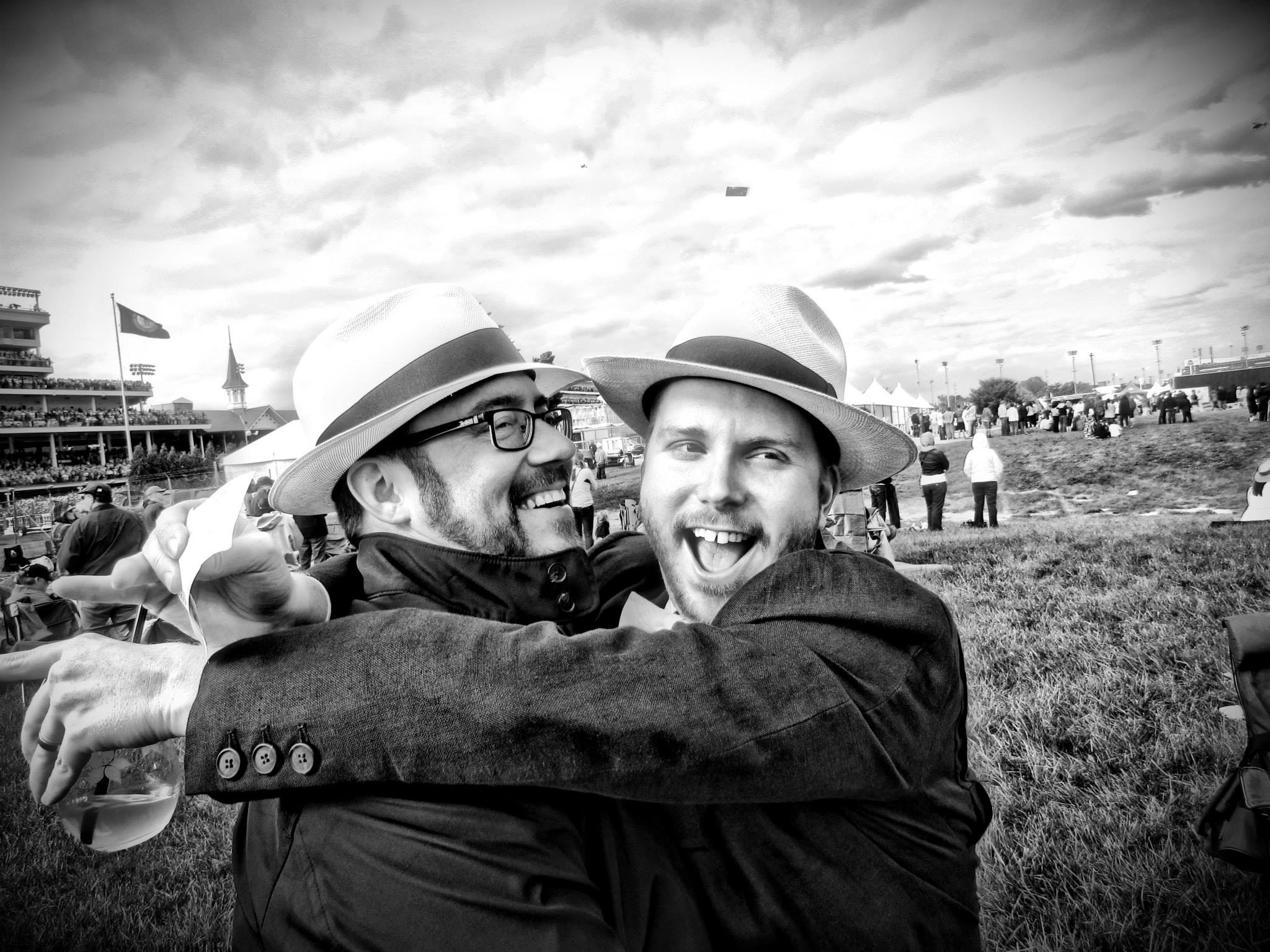
 What anyone who has actually been to the event that is the Kentucky Derby will tell you about that event is that the actual racing of the Kentucky Derby is but the briefest of moments in the entirety of the thing. Everyone pauses to observe the race, but the party has been going for days at that point, and will continue long into the night and onto (in good weather) brunch patios the next morning. The Derby race is very much a black truffle in a heaping dish of revelry, tradition and excess; small in terms of size, potent in flavoring the whole thing, and rich, decadent, sumptuous.
 The common wisdom among locals is that Friday is the day to visit Churchill Downs, that most storied of American horse race tracks, and leave the track on Saturday to out-of-towners and the ultra-rich. Friday features the annual racing of the Kentucky Oaks, the lesser famous but equally charming sister to the Derby, and to the casual observer who only pays attention to horse racing the first weekend in May (the running of the Derby is traditionally held on the first Saturday in May), the one could easily substitute for the other. In the years we have been in Louisville for the Derby weekend, we’ve always gone to the infield on Friday for the Oaks, and find the time superbly spent.
 Further in, there are tents and low buildings, most of them hawking any manner of overpriced beverages, overpriced foods, useless (and overpriced) souvenirs; these are largely ignorable, save the location selling ice, racing forms, and the betting windows, to which any visitor ought to make at least one trip. The place is packed with people, some well dressed, some decidedly not. A sort of controlled chaos unfolds around; it’s noisy, but not deafening, and crowded, but not pressing. Almost everyone is having a good time. Police are patrolling, but everyone (at least at this point) is well behaved. To your left, a gigantic screen shows footage of people you’ve never heard of talking about hats, or horses, or who knows what else. You keep walking.
 Towards the westernmost edge of the infield, there is a dip in the topography, essentially a large grassy ditch that must collect rainwater during big storms, but now is the site of children running and tagging and squealing. On the other side of that dip, there is a large grassy expanse, and here you find a patch that seems firm and right, and you finally, thankfully, set up your things. Blanket down first, then open the folding chairs, and then you dislodge all of the hidden bottles of bourbon. These bottles could be hidden any and every place; in your socks (true story), in the back of your folding chairs, in purses, beneath sandwiches, in the rolled up blanket. Outside booze is not allowed, and supposedly, the guards at the gate search personal belongings; only hopefully they didn’t search too hard, if at all, and now, you can enjoy delicious beverages without the bitterness of paying exorbitant prices for them.
 You definitely brought mixers if you brought bourbon, you hopefully brought cups, and if you thought it out beforehand, things to snack on. Someone is sent to get ice and racing forms. It is useful, also, when preparing for a day at the track, to bring a pen to make notes as to which horses you want to bet on and what bets you’ll make on each. I always seem to forget, but thankfully somebody else always seems to have one.
 The next several hours are some of the most pleasurable of the year. Louisville in May can have the loveliest weather anyone could ask for, with blue skies, light breezes, agreeable temperatures. A seemingly endless supply of bourbon and lemonade softens the edges of everything; the conversation meanders happily from the races to any topic one can think of and back again. Bets are discussed; box this trifecta? Do you think number 6 will place or show? What are the odds on number 14? It is a language specific to horse races, one that must be dusted off and relearned every year for these two days, and then forgotten again. The names of the horses are endlessly entertaining; how could you not bet on a horse called I’ll Have Another? What kind of name is Tencendur? And of course, the parade of people is always fascinating; here a family with adorable children out for some time in the sun, there a pack of young men in their late 20s impeccably suited and laughing, further off a couple with dreadlocks and overalls they have cut into jean jumpers with short shorts, their underthings peeping out. There is simply so much to see, one wishes the time would pass more slowly, so you could savor it longer.
 And what of the races themselves? They’re exciting of course, and if you’ve bet (and you should, at least a little), you might win some money. The horses are beautiful, and watching them run reveals why someone might’ve decided to start horse racing in the first place. The day as a whole, though, is about much more than just horse races, and odds are, if you’re paying attention, you’ll find it equally as beautiful.


 The dolphins are elusive. The boat we take is small—only one seat on each side of a center aisle—and as we cut across the natural crests and troughs of the sea, there are moments panic balloons inside my chest. The captain is unconcerned; carting tourists out onto the water to try to catch a glimpse of the famous ‘pink’ dolphins is what he does every day, when there are tourists visiting the village of Tai O. Today there are not many of us, and his boredom is clear.
 We settle again into the rhythm of the water, and look around the boat. In the distance, the giant construction of a roadway is in progress. I focus towards the area our captain originally indicated, and we sit, rocking and watching. It is quite nice, and I wish we could stay out on the boat for longer. Suddenly, someone gasps and everyone looks to where the gasper is pointing. There, fifteen yards away, is a small arc along the top of the water line of wet pink flesh. All eyes scan the water where the dolphin appeared; will there be more? Will they come close enough for us to touch, or snap a picture of? We wait, but there is nothing. We linger for a few more seconds until the sputter of the motor forces announces we’re heading back. The dolphins were spotted; the captain has fulfilled the promise of the tour, and now it’s time to head back.
 The trip back into Tai O is sublime. The spray is clean and gets in our faces but doesn’t soak us, and the breeze is unbeatable. Too soon we are closing in on the village. The captain takes us a little bit up the river to see the houses from the water. There is much poverty here, we see, as the houses give way to shacks and less. The beams that support the structures are covered in unorganized mosaics of shells and bits of debris. As we pull back into the dock and step off the vessel, I think about suggesting we take the tour again, but I do not, and we embark down the alleyway towards the footbridge.
 It is a lovely thing, to sit on a patio overlooking water with a beer. We talk about the boat trip, and Tian Tan, and the economy of this village. There is a little plastic sign that proudly proclaims “We don’t have wifi!” and in smaller print underneath “enjoy our patio.” I like this place, and its defiance of the pressure of technology. We finish our beers and head back out into the alley, where we then decide to duck into the establishment next door to check out the difference. This patio is nicer, and we decide on another beer. Drinks here are more expensive; apparently, though remote, the people of Tai O are not unaware of the invisible hand of the market.


 The Galavanteers